
Coronary artery disease can be treated in several ways, ranging from medicines and lifestyle measures to catheter-based procedures and heart surgery. Angioplasty is one important treatment, but its suitability depends on the pattern and complexity of the disease rather than simply the presence of a blockage.
Understanding these differences can help patients make sense of recommendations after coronary investigations.
How Angioplasty Works
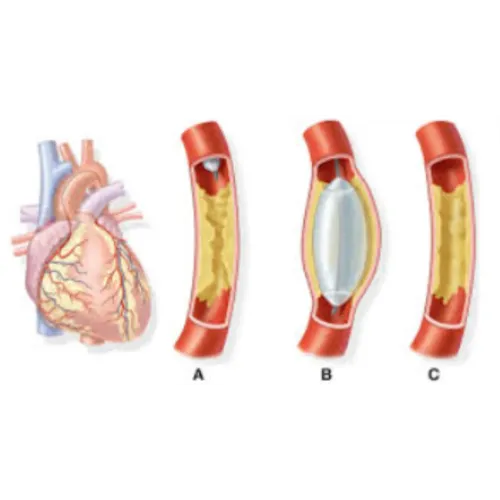
Coronary angioplasty is used to improve blood flow through a narrowed coronary artery.
A catheter is guided to the affected artery, where a small balloon can be inflated to expand the narrowed area. A stent is commonly placed to help keep the artery open.
For appropriately selected patients, this can restore blood flow without open-heart surgery.
When Angioplasty May Be Considered
The procedure may be appropriate for selected coronary narrowings where the anatomy can be treated effectively through a catheter-based approach.
Doctors evaluate:
- Number of affected arteries
- Location of blockages
- Length and complexity of narrowing
- Severity of symptoms
- Heart function
- Previous cardiac treatment
- Other medical conditions
The clinical setting also matters. Treatment decisions during an acute heart attack can differ substantially from decisions for stable coronary disease.
When Bypass Surgery Enters the Discussion
Coronary artery bypass grafting creates alternative routes for blood to reach heart muscle beyond significantly narrowed arteries.
Surgical assessment may be considered when disease is extensive, involves multiple important coronary vessels, affects certain critical anatomical areas, or has features making catheter treatment less suitable.
Diabetes, reduced heart function, previous stenting, age, overall health, and coronary anatomy can influence the decision.
Why Patients Should Avoid Comparing Procedures by Incision Size
Angioplasty is less invasive than bypass surgery, but that does not automatically make it the best treatment for every patient.
The more useful question is whether a treatment is likely to provide appropriate and durable management for the particular coronary anatomy.
A smaller procedure that does not adequately address complex disease may not offer the desired long-term strategy. Conversely, major surgery should not be performed when a less invasive approach is clinically sufficient.
Questions to Ask After an Angiogram
If angiography reveals coronary artery disease, consider asking:
- How many major arteries are affected?
- Are the blockages simple or complex?
- Is medication alone a reasonable option?
- Is angioplasty technically suitable?
- Should a cardiac surgeon review the angiogram?
- What are the advantages and risks of each approach?
- How might diabetes or other illnesses affect the decision?
- What follow-up will be needed after treatment?
These questions encourage discussion based on individual disease rather than general assumptions.
Why Multidisciplinary Evaluation Matters
Complex coronary disease may benefit from evaluation involving both interventional cardiology and cardiac surgery.
Each specialty approaches coronary circulation from a different treatment perspective. Reviewing the complete clinical picture can help determine whether medical management, angioplasty, bypass surgery, or another strategy is most appropriate.
For patients in Pune, Maharashtra, access to both diagnostic cardiology and cardiac surgical expertise can be particularly valuable when angiography reveals extensive disease.
Dr Ashish Khanijo Cardiac Specialist evaluates patients with cardiac conditions that may require surgical management, including complex coronary artery disease.
The purpose of treatment is not merely to make an angiogram look better. It is to improve clinically important blood flow, manage symptoms, reduce relevant cardiovascular risk where possible, and choose a strategy appropriate for the patient's overall condition.
Keywords