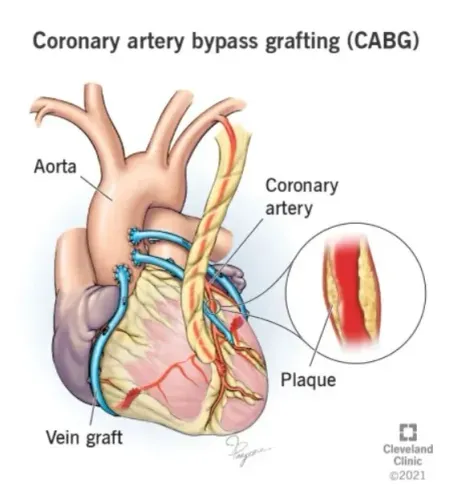

A vascular surgeon’s experience with arteries outside the heart does not automatically qualify that surgeon to lead coronary artery bypass grafting. You will learn which training and hospital capabilities to verify, how complex and redo cases differ from routine bypasses, and how to compare surgery with stenting or medical treatment.
Key takeaways
- CABG is normally led by a cardiac, cardiothoracic or cardiovascular surgeon.
- Complex bypass needs advanced grafting and cardiac critical-care expertise.
- Redo bypass requires planning around scar tissue, old grafts and prior surgical records.
- Compare CABG with stents and medication using anatomy, risk and long-term goals.
Who is qualified to lead coronary bypass surgery?
A conventional vascular surgeon in Pune primarily treats the aorta, carotid arteries, leg arteries and veins. Coronary artery bypass grafting (CABG) is normally led by a cardiac, cardiothoracic or cardiovascular surgeon because the operation requires coronary exposure, grafting and cardiac critical-care expertise.
Indian titles create confusion. “Cardiovascular and thoracic surgery” can describe postgraduate training that includes cardiac surgery, while “vascular surgery” alone refers to blood-vessel treatment outside the heart and does not establish CABG training. Do not judge competence from the word “vascular” in a profile.
Before choosing a lead operator, verify:
- An MCh or DNB in Cardiothoracic and Vascular Surgery, or an equivalent cardiac-surgery qualification
- Current hospital privileges to perform CABG
- Documented recent CABG practice, including complex cases when relevant
- Access to cardiac anaesthesia, perfusion, intensive care and emergency re-exploration
An MBBS degree, general-surgery training, peripheral vascular reconstruction or harvesting a radial artery or saphenous vein does not by itself prove competence to perform coronary anastomoses, manage cardiopulmonary bypass, protect the heart during surgery or treat postoperative cardiac complications.
A vascular surgeon can contribute when you also have aortic, carotid or limb disease, difficult vascular access or conduit problems. That collaboration does not make the vascular surgeon the CABG lead. Confirm the lead operator’s cardiac-surgery credentials and recent operative experience directly with the hospital.
What makes complex coronary bypass surgery different?
Complex coronary bypass surgery in Pune describes a high-risk case, not one named operation. Complexity may involve left-main disease, several blocked vessels, diffuse or heavily calcified arteries, weak left-ventricular pumping, diabetes, kidney disease, emergency presentation, previous chest surgery, failed grafts or too few usable conduits.
The plan depends on several tests:
- Coronary angiography maps each blockage and identifies graftable target vessels.
- Echocardiography measures ejection fraction and valve function.
- Electrocardiography identifies rhythm problems and evidence of previous heart injury.
- Blood tests check haemoglobin, glucose and clotting studies.
- Kidney-function testing affects contrast use and operative planning.
When indicated, CT can assess the aorta, sternum or existing grafts. It may reveal hazards that angiography alone does not show.
The surgeon may use an internal mammary artery, radial artery, saphenous vein, or a combination. Conduit quality matters because a diseased or damaged graft may not deliver lasting blood flow to the heart.
Radial-artery harvest requires an assessment of hand circulation before surgery. Avoid or reconsider it when ulnar flow is poor, arterial disease is severe, or advanced kidney disease creates a likely future need for dialysis access.
The safest graft plan matches conduit quality and long-term needs to the coronary targets, rather than simply using every available vessel.
Why does redo bypass require different experience?
A redo bypass surgeon in Pune performs a second or later coronary artery bypass grafting (CABG) operation after an earlier bypass. This is not a routine CABG with a different label: the surgeon must work around previous grafts, scar tissue and altered anatomy.
Re-entry through the breastbone can injure the heart, major vessels or a functioning internal-mammary graft when dense adhesions have attached them to the sternum.
Existing graft patency, the locations of old grafts, coronary angiography and prior operative reports guide the entry plan; when indicated, CT imaging of the sternum, grafts or aorta identifies hazards before surgery.
Limited remaining radial-artery, mammary-artery or saphenous-vein options can make reconstruction harder. Patients also often return with more advanced coronary disease, reduced heart function, diabetes, kidney disease or other conditions that increase perioperative risk.
Ask the team:
- How many redo CABGs has the surgeon performed recently, and how does that number compare with the lifetime CABG total?
- What is the planned re-entry strategy, including protection of existing grafts and major vessels?
- Which conduits remain suitable, and why are they recommended?
- Is continuous cardiac intensive-care support, cardiac anaesthesia, perfusion and blood-bank access available?
- Can the hospital perform emergency re-exploration if bleeding or another complication occurs?
Compare outcomes only when the time period, patient case mix, and inclusion of emergency and redo operations are stated. Raw success claims can conceal major differences in risk.
How is bypass weighed against stents and medication?
The job title cannot decide between medication, a stent and coronary artery bypass grafting (CABG). A Heart Team—an interventional cardiologist and cardiac surgeon—reviews:
- The angiogram and symptoms
- Left-ventricular function, diabetes and kidney disease
- Previous stents, surgical risk and life expectancy
- Your preferences after the options are explained
| Option | What it means | When it may fit |
|---|---|---|
| Medication | Controls angina and cardiovascular risk without revascularisation | Symptoms and risk remain controlled |
| Angioplasty with a stent | Opens a narrowed coronary artery through a catheter | A focal lesion is suitable, or surgical risk is prohibitive |
| CABG | Creates grafts around blocked coronary arteries | Selected left-main or complex multivessel disease, particularly with diabetes |
A high SYNTAX score signals anatomically complex disease, but it is not a treatment decision by itself. CABG may provide a better long-term strategy for selected patients, while a stent may avoid the recovery and operative risks of surgery. The choice also depends on expected graft and stent durability.
Hybrid treatment can combine a surgical arterial graft with PCI performed later or during the same treatment plan. That approach requires anatomy and risk to support both procedures.
A coronary bypass specialist in Pune should identify the exact angiogram findings, expected durability, risks and alternatives. “Complex” alone is not a reason to recommend surgery.
What should you verify before choosing a Pune surgical team?
A profile calling someone a vascular surgeon for complex coronary bypass surgery in Pune does not establish that they can lead CABG. Ask the hospital to verify postgraduate training such as MCh or DNB Cardiothoracic and Vascular Surgery, current CABG privileges, and documented experience.
- Ask for the surgeon’s annual CABG volume over the past three years, plus recent numbers for complex and redo CABG. Ask how frequently internal-mammary, radial-artery and other arterial grafts are used.
- Request operative mortality and stroke rates for the same period. Ask whether the figures are risk-adjusted, which risk model was used, and whether emergency, high-risk and redo cases are included.
- Confirm continuous access to cardiac anaesthesia, perfusionists, a dedicated cardiac intensive-care unit, interventional cardiology, cardiac imaging, blood-bank support, emergency re-exploration and cardiac rehabilitation.
| Figure or claim | Question to ask | Why it matters |
|---|---|---|
| Annual CABG volume | Which years and cases are counted? | A lifetime total can hide limited current practice. |
| Mortality and stroke | Are results risk-adjusted for case complexity? | Raw percentages do not fairly compare teams. |
| “Complex” or “redo” expertise | How many recent cases match mine? | Similar anatomy and prior surgery change the risk. |
Request a plain-language explanation of your angiogram, graft plan, likely need for cardiopulmonary bypass, alternatives and recovery. When evaluating Dr Ashish Khanijo Cardiac Specialist. 08048032879, apply this same checklist and ask the hospital to confirm his current cardiac-surgery credentials, complex or redo experience and case-specific resources.
Do not choose a lead surgeon solely because a profile says vascular surgeon or because the doctor harvests vascular conduits.
Related products
 | Dr. Ashish Khanijo has been working as a Heart Specialist Doctor in Pune for many years and is also known for performing Coronary Bypass Surgery in... View product → |
 | Dr. Ashish Khanijo is known as Best Cardiac Surgeon in Pune Cardiac Surgery or Heart Surgery is performed to extend the lifespan of patients & to... View product → |
Frequently asked questions
Who is qualified to lead coronary bypass surgery?
A cardiac, cardiothoracic or cardiovascular surgeon normally leads CABG because the operation requires coronary exposure, grafting and cardiac critical-care expertise.
What makes complex coronary bypass surgery different?
Complex CABG can involve multiple blocked vessels, difficult coronary anatomy, reduced heart function or limited usable grafts, requiring advanced planning and perioperative care.
Why does redo bypass require different experience?
Redo CABG involves scar tissue, existing grafts and altered anatomy, so the team must review prior operative records and plan around previous surgery.
How should you compare bypass with stents and medication?
Compare the options using the number and location of blockages, symptoms, heart function, surgical risk, expected durability and the advice of a qualified heart team.
What should you verify before choosing a Pune surgical team?
Confirm the lead surgeon’s cardiac surgery qualifications, experience with complex or redo CABG, hospital cardiac intensive-care facilities and the proposed treatment plan.
Keywords