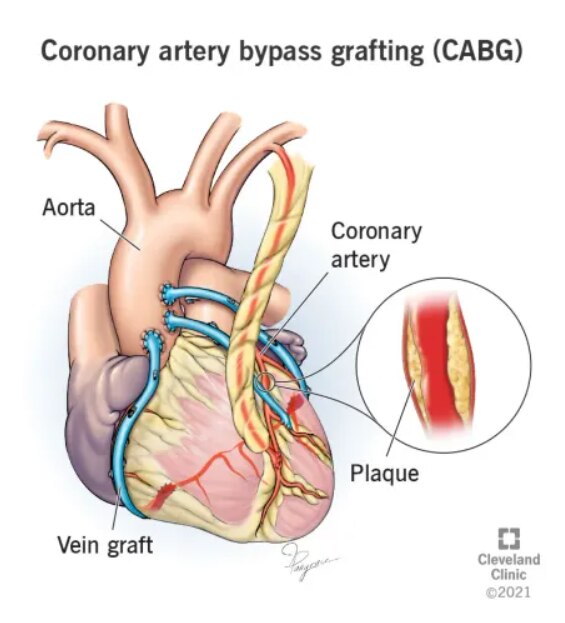
A lung abnormality does not automatically rule out coronary artery bypass grafting, but COPD, pulmonary fibrosis, asthma, bronchiectasis, scarring and an active infection create different risks. You will learn which tests matter, when surgery is postponed or replaced with another revascularisation plan, and how respiratory complications are prevented and treated before discharge.
Key takeaways
- COPD, emphysema and asthma raise different breathing risks during CABG.
- Spirometry, oxygen testing and chest imaging help assess lung readiness.
- Treat infections and uncontrolled bronchospasm before planned bypass surgery.
- Expect pain control, lung exercises and monitored breathing support after surgery.
Which lung problems change the risk of coronary bypass surgery?
A “lung defect” is not one diagnosis. Coronary bypass with lung defects carries different risks depending on whether the airways, lung tissue, blood vessels, pleura or anatomy is affected. COPD and emphysema increase air-trapping and weak breathing after anaesthesia; asthma adds bronchospasm risk.
Pulmonary fibrosis reduces oxygen transfer, while bronchiectasis increases retained secretions and infection risk.
| Condition | Main concern | Planning implication |
|---|---|---|
| COPD | Airflow obstruction and air-trapping | Expect harder ventilation and recovery |
| Emphysema | Fragile, overexpanded tissue | Assess bullae and pressure-injury risk |
| Asthma | Variable airway narrowing | Control bronchospasm before surgery |
| Pulmonary fibrosis | Poor oxygen transfer | Assess diffusion and oxygen reserve |
| Bronchiectasis | Secretions and recurrent infection | Check for active infection |
| Lung nodule or mass | Benign, infectious or malignant cause | Characterise before non-emergency CABG |
| Bullae | Thin-walled air spaces | Pneumothorax risk during ventilation |
| Prior lung surgery | Altered anatomy or reduced reserve | Review surgical history and imaging |
| Pleural or tuberculosis scarring | Restricted expansion and adhesions | Assess chest mechanics |
| Pulmonary hypertension | High right-heart and anaesthetic stress | Obtain specialist risk assessment |
| Congenital abnormality | Unusual anatomy or reduced lung | Map anatomy before graft planning |
| Active infection | Inflamed, poorly oxygenating lungs | Treat pneumonia before elective CABG |
An abnormal chest X-ray alone does not determine eligibility. Symptoms, oxygen levels, CT findings, exercise tolerance and the urgency of coronary treatment matter more. Characterise a lung mass, nodule or scar before non-emergency surgery when time allows; urgent coronary ischaemia can require teams to address the immediate threat first.
The key question in lung defects and heart surgery is which condition is most dangerous today.
What tests show whether the lungs are ready for CABG?
Preoperative testing identifies which lung problems raise bypass surgery complications and which ones can be corrected first. The assessment is targeted: clinicians review smoking history, inhalers, oxygen use, exercise tolerance, frailty and heart function, then order tests that match your symptoms and disease.
| Test or finding | What it shows | How the team uses it |
|---|---|---|
| Spirometry, including FEV1 | Airflow obstruction and severity | Adjusts risk assessment and inhaler treatment |
| Diffusion capacity (DLCO) | How well oxygen crosses into blood | Flags impaired gas exchange, especially with fibrosis or emphysema |
| Oxygen saturation and arterial blood gases | Low oxygen or carbon-dioxide retention | Uses blood gases when oxygen or carbon-dioxide problems are suspected |
| Chest X-ray or CT | Infection, fluid, bullae, scarring or pulmonary hypertension clues | Treats active disease and plans anaesthesia |
| Exercise tolerance and frailty | Breathing reserve and recovery capacity | Helps predict ventilation and rehabilitation needs |
| Sleep-apnoea screening | Sleep-related airway obstruction | Starts prescribed treatment before elective surgery |
A single FEV1 number cannot predict safety. Ask the hospital for an individualised estimate that includes oxygen dependence, chronic lung disease severity, frailty, heart function and whether surgery is urgent.
- Active pneumonia or another recent respiratory infection
- Low oxygen levels or severe airflow obstruction
- Uncontrolled asthma
- Pulmonary hypertension or fluid overload
- An untreated sleep-breathing disorder
When should the team proceed, postpone bypass or choose another plan?
Proceed with bypass when coronary danger is high and respiratory problems are stable enough for a planned anaesthetic. The cardiac surgeon, cardiologist, cardiac anaesthesiologist and pulmonologist compare the danger of operating with the danger of leaving coronary disease untreated; lung disease alone does not make CABG unsuitable.
For elective surgery, use the time to reduce reversible risk:
- Stop smoking immediately; longer abstinence is better, but recent smoking alone should not deny necessary surgery.
- Review inhalers and other treatment, control asthma or COPD, and treat pneumonia or another active infection before operating.
- Begin pulmonary rehabilitation, walking practice or breathing training when appropriate.
- Review influenza and pneumococcal vaccination status.
- Treat sleep apnoea with the prescribed CPAP or other therapy.
- Correct fluid overload and poorly controlled heart failure.
| Decision | What it means | When it applies |
|---|---|---|
| Proceed with CABG | Accept respiratory risk for the greater cardiac benefit | Coronary disease is serious and lung function is stable or optimised |
| Postpone briefly | Treat a reversible problem before anaesthesia | Active infection, uncontrolled bronchospasm, fluid overload or untreated sleep apnoea is present |
| Choose another revascularisation plan | Consider angioplasty or another strategy | Respiratory risk is exceptionally high and the cardiac anatomy permits it |
Off-pump CABG avoids the heart-lung machine, but it is not a guaranteed way to prevent pulmonary complications. Graft strategy and team expertise still matter. Anyone researching coronary bypass surgery for lung defects in Pune should request an individual risk estimate, not rely on a generic online percentage.
How do anaesthesia and the operation affect impaired lungs?
General anaesthesia stops normal breathing, so a breathing tube delivers oxygen and removes carbon dioxide during coronary bypass with lung defects. Intubation can irritate the airway and trigger bronchospasm, while anaesthesia and lying flat reduce lung expansion.
Cardiopulmonary bypass changes blood flow and fluid balance. Extra fluid can enter lung tissues, making oxygen transfer harder after the operation. Ventilation must therefore match the lung problem: fragile bullae or structurally weak lungs need carefully limited airway pressures because excessive pressure can cause barotrauma or a pneumothorax.
The respiratory complications to understand include atelectasis, pneumonia, bronchospasm, pleural effusion, low oxygen, respiratory failure, prolonged mechanical ventilation and a longer intensive-care stay. These bypass surgery complications are more likely when lung reserve is poor, but a longer time on the ventilator does not mean permanent lung failure.
The team removes the tube when several checks are satisfactory:
- Oxygenation is adequate with acceptable ventilator support.
- Carbon-dioxide removal is adequate.
- Blood pressure and circulation remain stable.
- Body temperature has returned to normal.
- You are awake enough to follow commands.
- You can cough and protect your airway.
There is no fixed extubation clock. A patient with impaired lungs may need additional ventilator time while fluid balance, gas exchange or circulation improves; the intensive-care team reassesses these measures rather than treating delay alone as lung failure.
What breathing support and follow-up should you expect after bypass?
After bypass, staff continuously monitor oxygen saturation, breathing rate and carbon-dioxide levels when indicated. Keep the head of the bed elevated, control pain enough for deep breaths and coughing, and begin chest physiotherapy and mobilisation as soon as circulation and consciousness permit.
Incentive spirometry supports lung expansion, but it is not a complete prevention plan. Pair it with coughing, deep breathing, assisted movement and prompt treatment of secretions or infection.
Clinicians remove the breathing tube when oxygenation and carbon-dioxide handling are adequate, circulation and temperature are stable, you are alert, and you can protect your airway. A longer ventilation period does not mean permanent lung failure.
| Problem after bypass | What the team may do | What requires prompt attention |
|---|---|---|
| Atelectasis or mucus retention | Deep breathing, physiotherapy, mobilisation and suction | Falling oxygen levels or increasing work of breathing |
| Bronchospasm | Inhaled bronchodilators and adjusted ventilation | Wheezing, tightness or difficult exhalation |
| Pneumonia or fluid around the lung | Imaging, antibiotics or drainage when indicated | Fever, worsening cough or new oxygen need |
| Respiratory failure | Non-invasive support or reintubation in intensive care | Exhaustion, rising carbon dioxide or inability to protect the airway |
Before choosing a coronary bypass surgeon in Pune, ask for the hospital’s rates of pneumonia, reintubation and prolonged ventilation. Ask whether pulmonology, cardiac anaesthesia, a cardiac ICU and rehabilitation are available, and how home oxygen or respiratory follow-up is arranged.
Dr Ashish Khanijo Cardiac Specialist should be evaluated using these answers alongside other Pune teams, not by location alone.
Related product
 | Dr. Ashish Khanijo has been working as a Heart Specialist Doctor in Pune for many years and is also known for performing Coronary Bypass Surgery in... View product → |
Frequently asked questions
Which lung problems change the risk of coronary bypass surgery?
COPD, emphysema, asthma, lung infections, pulmonary hypertension, pleural disease and abnormal chest anatomy can change airway, oxygenation and recovery risks.
What tests show whether the lungs are ready for CABG?
The team may use spirometry, oxygen saturation, arterial blood gas testing, chest X-ray or CT, echocardiography and functional assessment to evaluate breathing reserve.
When should the team postpone bypass or choose another plan?
Postpone planned surgery to treat an active chest infection, uncontrolled asthma or severe respiratory instability. The team may consider urgent bypass or another treatment when delaying heart treatment is more dangerous.
How do anaesthesia and the operation affect impaired lungs?
General anaesthesia, chest incision pain, mechanical ventilation and reduced movement can worsen air-trapping, mucus retention, atelectasis and pneumonia risk.
What breathing support and follow-up should you expect after bypass?
Expect monitored oxygen or ventilatory support when needed, early mobilisation, incentive spirometry, coughing exercises, pain control and follow-up for persistent breathlessness or infection.
Keywords