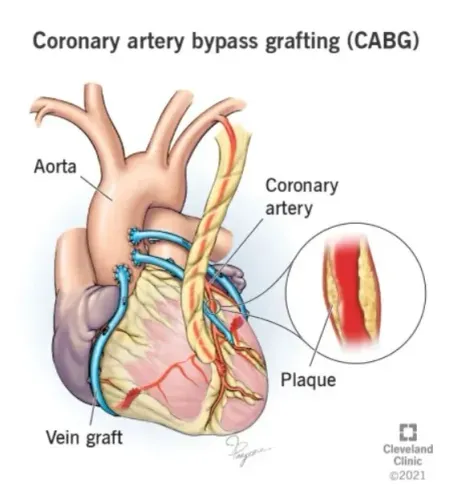

Coronary bypass surgery is worthwhile when the pattern of artery disease, heart function and overall health make its longer-term benefits greater than the risks of a major operation. By the end, you will know which findings favour bypass, what trade-offs to compare with angioplasty, and how to prepare for a consultation that produces a specific recommendation rather than a decision based on one blockage percentage.
Key takeaways
- Extensive disease in several coronary arteries can make bypass more beneficial than stents.
- Ask how many important heart territories can receive durable grafts.
- Compare survival, symptom relief, recovery burden and lifelong treatment before deciding.
- Bring angiogram images, medication records and your complete medical history.
When bypass surgery offers more than medication or angioplasty
CABG is most likely to deliver a survival, heart-attack, symptom or quality-of-life advantage when disease is extensive and grafts can restore blood flow to all important territories. The coronary bypass benefits depend on anatomy and overall risk, not a blockage percentage or age alone.
| Situation | Why CABG may offer more | What to compare |
|---|---|---|
| Significant left-main disease | Bypass can protect blood flow beyond a major shared coronary supply point | Surgical risk, SYNTAX score and whether PCI can achieve complete treatment |
| Diabetes with multivessel disease | CABG has shown a stronger long-term outcome than PCI in suitable patients, despite more early stroke risk | Kidney function, graftable vessels and repeat-procedure risk |
| Complex or diffuse multivessel disease | Grafts can bypass several long, calcified or difficult-to-stent segments | Completeness of revascularisation and expected graft durability |
| Reduced heart-pumping function | Restoring blood flow can support symptoms and long-term heart function when viable muscle remains | Echocardiography, scar or ischaemia testing and operative risk |
For a sound bypass surgery decision, review the angiogram images, SYNTAX score, echocardiogram, symptoms, stress-test findings, kidney function, frailty, lung disease and prior stents. PCI can be reasonable for selected left-main or multivessel disease with low-to-intermediate complexity, while medication may be sufficient when symptoms are controlled or disease cannot be grafted.
CABG can relieve angina and improve exercise capacity, but lifelong cholesterol, blood-pressure, diabetes and smoking control remain necessary.
When bypass may add limited value or carry too much risk
Coronary bypass is not worthwhile when the diseased vessels are too small or diffusely narrowed to accept durable grafts, or when symptoms do not come from coronary blood flow. A severe non-cardiac condition can also make the early danger of major surgery greater than its expected benefit.
| Situation | Why bypass may add limited value | Possible focus |
|---|---|---|
| Small or diffuse disease | A graft may not improve blood flow or remain open | Medication or carefully selected PCI |
| Symptoms without demonstrable ischemia | Surgery will not treat reflux, lung disease, anaemia or musculoskeletal pain | Find and treat the actual cause |
| Severe frailty or organ disease | Kidney failure, advanced lung disease, prior stroke or poor heart function can raise risks of kidney injury, stroke, infection or death | Individual risk review and less invasive options |
| Limited life expectancy from another illness | Long-term graft benefit may never be reached | Symptom control and goals-of-care planning |
Age alone does not rule out CABG, but urgent surgery, frailty, uncontrolled diabetes, severe kidney disease or previous chest surgery can change the balance. The bypass surgery decision should use the angiogram images, echocardiogram, kidney function, lung status, stress-test evidence and expected completeness of revascularisation—not the percentage of one blockage alone.
Question the recommendation if no one explains what symptom or survival benefit is expected, which vessels can be grafted, and why medication or angioplasty is less suitable. Bypass also does not remove atherosclerosis; smoking, high LDL cholesterol and uncontrolled blood pressure can still cause graft or native-vessel failure.
How the Heart Team weighs anatomy, risk and long-term trade-offs
The question “Is coronary bypass surgery worth it?” is answered by the expected gain, not age alone. CABG is preferable to angioplasty when grafting offers better protection from heart attack or death, more reliable symptom relief, or a stronger quality-of-life benefit.
Your Heart Team studies the coronary angiogram, not just its written report. Echocardiography shows pumping strength; stress testing helps when the severity of a narrowing is uncertain; kidney function, diabetes, lung disease, frailty and previous procedures change the operative risk.
Important decision factors include:
- Left-main disease or several narrowed coronary arteries, especially when blockages are complex, long or diffuse.
- Diabetes with multivessel disease, where CABG has shown fewer major events over roughly five years than PCI, although surgery causes more early strokes.
- Reduced ejection fraction when restoring blood flow could improve the heart’s performance.
- A previous stent that failed, or anatomy that makes complete stenting unreliable.
- Small, heavily diseased vessels, severe non-cardiac illness, or symptoms caused by something other than blocked arteries; these reduce the likely value of bypass.
CABG carries early risks including bleeding, atrial fibrillation, kidney injury, stroke, infection, graft failure and death. PCI usually involves an easier initial recovery but can require repeat revascularisation; the choice depends on whether long-term benefit justifies surgical risk and recovery.
Ask a cardio vascular surgeon to explain graft targets, alternatives, personalised risk and how your preferences affect the recommendation. A second opinion is sensible for elective, uncertain cases, but never delay emergency treatment.
What recovery, graft durability and lifelong treatment involve
Expect a hospital stay, chest or leg-wound care, restricted lifting, reduced driving and several weeks away from normal work. Cardiac rehabilitation helps rebuild stamina, but recovery consumes time and family support. The coronary bypass benefits must be weighed against this immediate disruption.
| Option | Recovery and durability | Continuing responsibility |
|---|---|---|
| CABG | Longer recovery; a left internal mammary artery graft to the LAD often offers strong long-term patency, while vein grafts can narrow later | Medicines, rehabilitation and risk-factor control remain essential |
| Angioplasty and stenting | Usually faster recovery, but repeat procedures become more likely when disease is complex or extensive | Antiplatelet treatment and follow-up are critical |
| Medication alone | Avoids surgical recovery, but symptoms or coronary risk can persist when anatomy is high-risk | Strict long-term treatment and lifestyle control are required |
Bypass is not a permanent cure. Smoking, high LDL cholesterol, diabetes and uncontrolled blood pressure can damage both grafts and untreated coronary arteries, so expect lifelong statin and antiplatelet treatment when prescribed, blood-pressure or diabetes medicines when needed, regular lipid and glucose checks, exercise and a heart-healthy diet.
Ask how long you should avoid driving, lifting and work, which grafts are planned, and what symptoms require urgent review. A second opinion is reasonable for elective, uncertain decisions, but never delay emergency treatment.
How to prepare for a coronary bypass consultation in Pune
Bring the original coronary angiogram images, not just the written report, to your coronary bypass consultation in Pune. Add ECGs, echocardiography results, recent blood tests including kidney function, your medication and allergy list, details of previous stents or procedures, and a short record of symptoms, triggers and duration.
- Ask which coronary arteries need grafting, whether complete revascularisation is achievable, and whether the proposed conduits are the internal mammary artery, radial artery or vein grafts.
- Ask why CABG offers a better balance than medication or PCI for your anatomy, symptoms, heart-pumping function, diabetes, kidney disease and surgical risk. A recommendation based only on “80% blockage” is incomplete.
- Ask whether the operation will use a heart-lung machine, what recovery milestones and restrictions apply, and what complications are most relevant to you.
- Verify that the cardio vascular surgeon in Pune is trained and registered for cardiothoracic or cardiovascular surgery. Ask for the surgeon’s own experience with your proposed operation, not only the hospital’s case count.
- Verify that the hospital has a cardiac intensive care unit, blood-bank access and emergency reoperation support. Dr Ashish Khanijo Cardiac Specialist. 08048032879 can be one clinician you include when comparing those specific credentials and answers.
If the recommendation is elective and you remain uncertain, seek a second opinion with the same images. Do not delay emergency assessment for chest pressure at rest, prolonged pain, breathlessness, sweating, nausea, fainting or pain spreading to the arm, jaw or back.
Related product
 | Dr. Ashish Khanijo has been working as a Heart Specialist Doctor in Pune for many years and is also known for performing Coronary Bypass Surgery in... View product → |
Frequently asked questions
When can coronary bypass surgery offer more benefit than medication or angioplasty?
CABG can offer greater benefit when disease affects several vessels, the left main coronary artery, or areas that are difficult to treat with stents. Diabetes, reduced heart function and diffuse disease also influence the comparison.
When might bypass surgery add limited value or carry too much risk?
Bypass may add limited value when symptoms respond to medication and anatomy is suitable for less invasive treatment. Frailty, severe lung or kidney disease, prior chest surgery and limited graft targets can increase operative risk.
How does the Heart Team make a bypass surgery decision?
The cardiologist and cardiovascular surgeon review angiogram findings, heart function, symptoms, diabetes, kidney function, age, frailty and personal goals before comparing CABG, angioplasty and medical treatment.
What do recovery, graft durability and lifelong treatment involve?
Recovery includes hospital care, wound healing, gradual activity and cardiac rehabilitation. You still need prescribed medicines, cholesterol and blood-pressure control, diabetes management, exercise, follow-up and smoking cessation to protect the grafts and native arteries.
How should I prepare for a coronary bypass consultation in Pune?
Bring angiogram images and reports, echocardiogram results, blood-test reports, medication and allergy lists, previous operation records and written questions about risks, alternatives, recovery and expected benefits.
Keywords