
Chest pain, a positive stress test or a blocked artery on an angiogram does not automatically mean you need bypass surgery or angioplasty. By the end, you will know what angioplasty involves, which benefits it can provide, when bypass is more suitable, and how to assess a Pune hospital and specialist before consenting to treatment.
Key takeaways
- Angiography identifies blocked arteries before doctors recommend angioplasty.
- Angioplasty suits selected blockages; complex disease may require bypass surgery.
- Compare specialist training, hospital facilities and emergency support before choosing care.
- Seek urgent help for chest pain, breathlessness or fainting after angioplasty.
What angioplasty does and why angiography comes first
Angiography comes first because doctors need to see the coronary arteries before choosing treatment. An interventional cardiologist threads a catheter through the radial artery at the wrist or the femoral artery at the groin, then uses X-ray guidance and contrast dye to create images of the artery’s lumen.
During angioplasty, the cardiologist advances a balloon to a selected narrowing, inflates it, and usually places a drug-eluting stent to hold the artery open.
- Restores blood flow through a narrowed or blocked coronary artery without opening the chest.
- Relieves angina caused by a blockage that is limiting blood flow.
- Reopens an occluded artery quickly during an acute heart attack, helping limit heart-muscle damage.
- Avoids open-chest bypass surgery in suitable cases.
Angiography shows anatomy, but an intermediate narrowing is not automatically the cause of inadequate blood flow. When symptoms, clinical urgency and the anatomy support PCI, doctors can proceed to treatment; FFR or iFR pressure-wire tests, and IVUS or OCT intravascular imaging, can clarify uncertain lesions and guide stent placement.
| Procedure | What it does | What it cannot establish alone |
|---|---|---|
| Angiography | Produces diagnostic X-ray images of the coronary artery lumen | Whether every intermediate narrowing reduces blood flow |
| Angioplasty (PCI) | Treats a selected narrowing with a balloon and usually a drug-eluting stent | That all atherosclerosis has been cured |
A stent does not remove atherosclerosis elsewhere. In stable disease, PCI mainly improves troublesome angina and quality of life; it does not automatically prolong life for every patient.
How doctors decide whether angioplasty fits your condition
Doctors choose PCI, medication or bypass surgery by matching the urgency, symptoms, artery anatomy and procedural risk to your goals. Angioplasty benefits include faster blood flow and angina relief, but PCI is not automatically the best treatment for every narrowing.
1. For suspected heart attack, the team checks symptoms, electrocardiogram changes and serial troponin results. Emergency primary PCI is time-sensitive when a blocked artery is causing the infarction; prompt reopening limits heart-muscle damage.
2. For stable exertional chest pressure, doctors review stress-test findings, coronary CT angiography and, when needed, invasive coronary angiography. They usually optimise guideline-directed medical treatment first, then consider PCI when angina remains troublesome or a treatable blockage explains inadequate blood flow.
3. Angiography shows the artery’s shape and lumen, but an intermediate narrowing does not always restrict flow enough to require a stent. FFR or iFR pressure-wire testing, plus IVUS or OCT imaging, can clarify the decision.
4. The assessment includes blockage location and severity, the number of affected vessels, left-main involvement, left-ventricular function, diabetes, kidney function, bleeding risk, age, frailty and overall surgical risk. Complex left-main or multivessel disease may favour CABG over PCI.
A Heart Team review is appropriate when anatomy is complex or the trade-offs differ. The discussion should compare PCI with medication and surgery, including recovery, durability and your preference, rather than treating one option as universally superior.
Angioplasty or bypass: which specialist and operation match the problem?
The right choice depends on the artery pattern, symptoms, diabetes, heart function, surgical risk and your priorities—not on a universal winner. PCI uses a catheter and stent, avoids a chest incision and usually offers a shorter initial recovery.
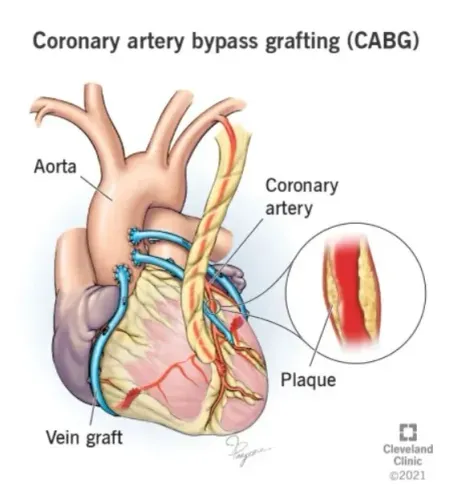
CABG uses surgical grafts to route blood around blocked arteries, but requires major surgery and a longer recovery.
| Option | What it involves | When it may fit |
|---|---|---|
| PCI (angioplasty) | A catheter opens the narrowing and a stent supports the artery | A suitable focal blockage, urgent heart attack treatment, or when avoiding open-chest surgery matters |
| CABG (bypass) | Grafts create new routes around blocked coronary arteries | Selected left-main disease, complex multivessel disease or diffuse blockages, especially when diabetes or other anatomy shifts the balance |
CABG can provide more durable revascularisation in selected complex disease, while PCI can be the less invasive solution for suitable anatomy. A Heart Team should weigh both options against medication, kidney function, left-ventricular function and operative risk; CABG also carries risks such as infection, stroke, kidney injury and graft failure.
The specialist distinction is important. An interventional cardiologist usually performs coronary angioplasty in a cardiac catheterisation laboratory, while a cardiothoracic or cardiac surgeon performs CABG and other open or minimally invasive operations. Cardiothoracic practice also covers the heart, great vessels, lungs, mediastinum and chest.
When consulting cardiothoracic surgeons in Pune, confirm the proposed surgeon’s coronary experience; a consultation about cardiothoracic surgery in Pune should also establish whether the need is cardiac or thoracic.
How to evaluate an angioplasty service and specialist in Pune
Compare the person performing PCI and the hospital behind them, not the title alone. “Angioplasty surgeon in pune” is an imprecise search term: an interventional cardiologist usually performs PCI, while a cardiothoracic surgeon performs CABG and other operations.
Ask these questions before consenting:
- Who will perform the PCI, and what is that clinician’s exact role?
- Does the hospital run a 24-hour catheterisation laboratory with cardiac anaesthesia and intensive-care support?
- Can the team use both radial access at the wrist and femoral access at the groin, and does it keep emergency stents available?
- If PCI fails or urgent surgery becomes necessary, is there a documented pathway to immediate CABG or transfer to a cardiac-surgery centre?
- How will the team check creatinine and kidney function, previous contrast allergy, current or planned antiplatelet treatment, and bleeding risk before consent?
- Who will arrange stent follow-up, medication review and assessment of recurrent symptoms?
A search for “cardiothoracic surgeons angioplasty for benefits in pune” needs a sharper question: who provides PCI, and who provides surgical backup? At a consultation with Dr Ashish Khanijo Cardiac Specialist. 08048032879, verify the proposed operator, hospital facilities and access to cardiac surgery rather than relying on a title.
A hospital that cannot explain its emergency pathway is not offering you a complete service, even if it has an experienced named specialist.
Related product
 | Dr. Ashish Khanijo is working in Cardiovascular and Thoracic surgery since 1996. View product → |
What happens after angioplasty, and what risks require attention?
Before PCI, the team takes consent, checks blood count, clotting results and kidney function, and asks about previous contrast reactions. Contrast dye can stress the kidneys, so abnormal creatinine or dehydration may change preparation, monitoring or treatment.
After the catheter comes out, staff apply pressure or a closure device at the wrist or groin and watch the puncture site, pulse, blood pressure, heart rhythm and symptoms. Before discharge, confirm:
- How long to keep the wrist or groin dressing dry and when to report swelling or persistent bleeding.
- The names and timing of antiplatelet medicines, statin, blood-pressure treatment and diabetes medicines.
- When kidney-function testing, cardiology review and cardiac rehabilitation will occur.
- The activity limits, driving advice and emergency contact number.
Uncomplicated elective PCI can end in same-day discharge or overnight observation. Emergency PCI, a complex intervention, bleeding, contrast-associated kidney injury, an arrhythmia or another illness can extend admission. Common problems include bruising or bleeding at the access site, a contrast reaction, kidney injury and abnormal heart rhythms.
Rare, life-threatening complications include coronary dissection, vessel closure, stroke, heart attack and death.
Do not stop prescribed antiplatelet medicine without medical advice: stopping early can allow a clot to form inside the stent. Protect the result with smoking cessation, exercise, a heart-healthy diet, cholesterol treatment and control of blood pressure and diabetes. For cardiothoracic surgery in Pune, recovery planning should reflect your actual procedure, not a generic promise.
Call emergency services for severe chest pain, breathlessness, sweating or collapse; do not drive yourself. During a suspected heart attack in Pune, go to the nearest PCI-capable hospital immediately rather than searching first for a named surgeon.
Frequently asked questions
What does angioplasty do, and why is angiography performed first?
Angioplasty opens a narrowed or blocked coronary artery using a catheter, balloon and usually a stent. Angiography uses contrast dye and X-ray imaging to show the artery’s location and severity before treatment.
How do doctors decide whether angioplasty is suitable?
Doctors assess the number, location and complexity of blockages, symptoms, heart function, diabetes, kidney health and overall surgical risk. They may recommend medication, angioplasty or bypass surgery.
When is bypass surgery preferred over angioplasty?
Bypass surgery may better suit multiple severe blockages, left main coronary artery disease, complex anatomy or selected patients with diabetes. A heart team should compare both options.
How should you evaluate an angioplasty specialist in Pune?
Check the doctor’s interventional cardiology training, hospital catheterisation laboratory, emergency backup, surgical support, stent explanation, written cost estimate and follow-up plan.
What happens after angioplasty, and which symptoms need urgent attention?
Follow prescribed antiplatelet medicines, protect the catheter-entry site and attend follow-up appointments. Seek urgent care for recurring chest pain, severe breathlessness, fainting, heavy bleeding or a cold, painful limb.
Keywords